
Harnessing Global Trade Shifts: Liberia’s Pathway to Economic Transformation

By James F. Kollie, Principal Advisor, Cardinal Point Advisors | April 13, 2025

As geopolitical tensions and trade wars between major economies disrupt global supply chains, countries like Liberia—often sidelined in traditional trade networks—have a rare opportunity to redefine their economic trajectories. With exports dominated by iron ore, rubber, and minimal gold, Liberia must act strategically to leverage this moment. Here’s how the nation can pivot from fragility to resilience and growth.

1. Diversify Agriculture and Agro-Processing

There is no dispute that Liberia is an agrarian economy. In this sector, we employ over 70% of its population and we still argue that it remains underutilized. While rubber dominates exports, the country has untapped potential in coffee, cocoa, oil palm, and cassava. There are many who dream that Liberia could move into services and tourism, but I will argue that those sectors require significant investment in physical infrastructure and human capital development. As important and promising as they are, I think they should come next in the pecking order. While we continue to collect rent from the exploitation of our depletable resources like iron ore and gold, we should the rent to begin to develop the infrastructure required to advance into services and tourism. However, the luxury of time is not there and therefore, we need to capitalize on the current global disruption to leapfrog our economy.

To capitalize on trade wars:

  • Shift to Value Addition: Instead of exporting raw rubber, invest in processing facilities for tires, latex products, or biofuels. Similarly, we can transform cocoa and coffee into premium goods for international markets. Even if the African Growth and Opportunity Act (AGOA) is no longer available, there is a global demand for these products and Liberia can position herself to tap into this market.
  • Leverage our vast arable land: Liberia has a vast amount of land that can be used to grow various agricultural products, ranging from rice to cassava to soybeans. Why not attract companies from China, India, Vietnam, or Russia to begin to grow and process these products in Liberia? Once there are mega farms, these will create market opportunities for outgrowers and smallholders.
  • Leverage Regional Demand: With Africa’s food import bill exceeding $60 billion annually, Liberia can target regional markets like ECOWAS by boosting rice and cassava production, reducing reliance on East Asian imports.

Example: The World Bank’s Rural Economic Transformation Project has already increased crop yields for 64,572 farmers. Scaling such initiatives could position Liberia as a regional breadbasket.

2. Accelerate Intra-Africa Trade Under AfCFTA

Africa’s intra-regional trade stands at just 15–20%, far below Europe (70%) or Asia (60%). Liberia’s membership in the African Continental Free Trade Area (AfCFTA) offers a lifeline:

  • Target Niche Markets: Export timber, palm oil, and aquaculture products to neighboring countries. For instance, Ghana’s $1.7 billion poultry import gap could be filled by Liberian poultry farms.
  • Digital Trade Platforms: Adopt the Africa Trade Gateway to connect SMEs with buyers across the continent, bypassing traditional barriers.

Policy Action: Streamline cross-border customs and reduce non-tariff barriers, as recommended in Liberia’s Diagnostic Trade Integrated Study.

3. Revive Tourism as a Revenue Engine

Liberia’s pristine beaches, rainforests, and cultural heritage remain underexploited. Post-Ebola and COVID-19, global travelers seek “off-the-beaten-path” destinations:

  • Eco-Tourism and Surfing: Robertsport’s surf-friendly waves and Lake Piso’s biodiversity are prime assets. The Enhanced Integrated Framework (EIF) has already built visitor centers and trained 200 stakeholders here.
  • Cultural Festivals: Annual events like the 2022 Cultural Festival can attract diaspora engagement and international tourists.

Investment Needed: Partner with platforms like Afreximbank to fund hotel infrastructure and market Liberia as a sustainable tourism hub.

4. Build Renewable Energy and Infrastructure

High electricity costs (over $0.54/kWh) and poor roads stifle industrialization.

Solutions include:

  • Solar and Hydropower: The World Bank-backed RESPITE Project is developing 20 MW solar plants and expanding the Mt. Coffee Hydropower Plant. Reliable energy can attract light manufacturing (e.g., textiles, pharmaceuticals) to replace imports.
  • Port Modernization: Buchanan and Monrovia ports, critical for export logistics, require upgrades to handle increased agro-processing output.

5. Foster Digital and Financial Inclusion

Only 45% of Liberians have mobile phones, and SMEs struggle with trade finance. To bridge gaps:

  • Mobile Money Systems: The REALISE Project has already connected 53,000 households to digital payments. Scaling this can empower rural farmers and informal traders.
  • E-Commerce Readiness: Implement the 2018 e-Trade Readiness Assessment to integrate Liberia into global digital value chains.

Conclusion: A Call for Strategic Partnerships

Liberia’s success hinges on collaboration. The government must:

  • Strengthen institutions (e.g., the National Investment Commission) to attract FDI in agro-processing and renewables.
  • Partner with Afreximbank and the World Bank to de-risk private investments.
  • Prioritize education and vocational training to build human capital for a diversified economy.

Trade wars are not just disruptions—they are invitations to innovate. By focusing on regional integration, value addition, and green energy, Liberia can transform from a commodity-dependent nation into a resilient, diversified economy. The time to act is now.


Let’s discuss: What other sectors should Liberia prioritize? Share your thoughts below. #EconomicDevelopment #TradeWars #LiberiaRising #AfCFTA #SustainableGrowth
Navigating the Storm: Strategic Options for Liberia Amid Declining US Aid and Rising Global Trade Tensions

Navigating the Storm: Strategic Options for Liberia Amid Declining US Aid and Rising Global Trade Tensions

The global economic landscape is shifting dramatically, driven by increased protectionism, strategic trade rivalries, and policy pivots from traditional donor countries. Notably, the United States—historically a key development partner to African nations—is scaling back direct aid while simultaneously escalating a global trade war. This shift poses considerable challenges for African economies like Liberia, a country traditionally reliant on external financial assistance and trade preferences. Yet, amidst these challenges lie significant opportunities for strategic realignment and economic resilience.

Understanding Liberia’s Economic Exposure

For decades, Liberia has benefited from strong historical ties with the United States through development aid, budget support, direct investments, and favorable trade arrangements, such as the African Growth and Opportunity Act (AGOA). Reductions in aid, therefore, present immediate threats in critical areas like public health, education, infrastructure, and fiscal stability.

At the same time, escalating trade tensions between the US and major economic players (including China and the European Union) have created global economic uncertainty. Such tensions disrupt international supply chains, inflate commodity prices, and could potentially slow global economic growth, indirectly impacting Liberia’s exports and investments.

Strategic Pathways for Liberia

Faced with this dual challenge of diminishing aid and global trade tensions, Liberia must proactively reposition itself. The following strategies offer viable paths forward:

1. Deepening Regional Integration and Intra-African Trade

Liberia should intensify its efforts to leverage the African Continental Free Trade Area (AfCFTA). With an estimated combined GDP of around $3 trillion, AfCFTA presents a unique opportunity to boost Liberia’s trade potential and attract new investment streams. Prioritizing regional infrastructure projects and trade corridors can facilitate better connectivity, improve logistics performance, and significantly reduce trade costs within the region.

Key actions:

  • Invest in Cross-border Infrastructure: Improve roads, bridges, and railways connecting to neighboring markets like Guinea, Sierra Leone, Ivory Coast, and Ghana.
  • Develop Regional Export Zones: Establish specialized economic zones designed specifically to serve regional markets and benefit from reduced intra-regional tariffs.

2. Diversifying International Partnerships

As the US recalibrates its global strategy, Liberia must actively diversify its diplomatic and economic partnerships. While relationships with traditional partners remain important, stronger ties with emerging economies—China, India, Brazil, Turkey, and Gulf States—are increasingly essential. These nations have demonstrated consistent interest in investing in African infrastructure, agriculture, and natural resources sectors.

Key actions:

  • Bilateral Economic Diplomacy: Pursue targeted trade and investment deals with these new partners, emphasizing sectors such as agriculture, renewable energy, mining, and logistics.
  • Policy Adaptation: Create a more transparent, investment-friendly environment with clear incentives for investors seeking long-term economic partnerships.

3. Accelerating Economic Diversification

Liberia remains overly dependent on primary commodities—rubber, iron ore, timber, and palm oil. Such dependency exposes the economy to global market volatility and price fluctuations, particularly in turbulent trade scenarios. Therefore, aggressively promoting economic diversification can enhance resilience and reduce vulnerability.

Key actions:

  • Agricultural Value Addition: Invest in processing industries to add value locally and generate employment.
  • Digital Economy and Services Sector: Build capacity in ICT, fintech, digital entrepreneurship, and business process outsourcing—sectors less affected by traditional trade disputes and potentially more attractive to younger demographics.

4. Enhancing Domestic Resource Mobilization

Reduced external aid underscores the necessity of efficient domestic revenue mobilization. Liberia must improve its tax system by increasing compliance, minimizing leakages, and promoting equitable taxation to sustainably finance its own development.

Key actions:

  • Tax System Modernization: Implement digital systems for tax collection, integrate technology in customs administration, and introduce policies that enhance transparency and reduce corruption.
  • Formalizing Informal Economic Activities: Design incentives to formalize small businesses and informal traders, thereby broadening the tax base.

5. Attracting Responsible Private Capital

Liberia should become more aggressive in courting private capital through Public-Private Partnerships (PPPs), impact investing, and venture capital inflows, particularly targeting diaspora Liberians. By clearly articulating investment opportunities and providing transparent investment frameworks, the country can attract impactful capital.

Key actions:

  • Robust Legal and Regulatory Frameworks: Enact transparent, investor-friendly regulatory reforms to encourage long-term private investments in infrastructure and social sectors.
  • Diaspora Engagement: Implement targeted initiatives that incentivize Liberians abroad to invest and contribute through remittances, skills transfer, and direct business creation.

6. Leveraging International Climate Finance

With global attention increasingly focused on climate resilience and adaptation, Liberia can position itself strategically to access international climate finance mechanisms. Investments in renewable energy, forestry conservation, and sustainable agriculture offer critical opportunities for leveraging significant external resources.

Key actions:

  • Green Investment Initiatives: Create viable projects aligned with international climate finance priorities (e.g., renewable energy projects, climate-smart agriculture, biodiversity protection).
  • Capacity Building: Enhance technical and administrative expertise within government agencies to access and efficiently manage climate finance.

Conclusion

The current global trade war and the US aid withdrawal represent genuine challenges, but also a critical inflection point for Liberia. Success depends on strategic foresight, decisive policy actions, and pragmatic international engagement. Rather than waiting passively for external solutions, Liberia must proactively redefine its economic direction, build resilience, and actively seize new global opportunities.

This turbulent global economic environment can serve as a catalyst, prompting Liberia—and similarly positioned African nations—to assert greater economic independence, regional cooperation, and resilience. The time to act decisively is now.


Your thoughts, insights, and comments are welcome—let’s exchange ideas on how Liberia and similar economies can successfully navigate these complex global shifts.

The Impact of USAID Assistance Cuts on African Economies and Multinational Investments

The recent cuts in USAID assistance to poorer African nations could have far-reaching consequences, not only for government budgets but also for multinational corporations operating on the continent. With reduced foreign aid, many African governments may seek alternative revenue sources, potentially leading to higher taxes, reduced investment incentives, and stricter regulations for foreign businesses.

This shift raises concerns about economic nationalism, with some countries prioritizing local enterprises over foreign investors. If these trends accelerate, multinational companies may face increased costs, capital restrictions, and policy uncertainty, leading to a slowdown in foreign direct investment (FDI).

For African nations heavily reliant on aid, the fiscal strain could be severe, potentially resulting in increased borrowing, currency instability, and cuts to essential services. The coming months will be crucial in determining whether governments adopt a protectionist stance or seek to maintain investor confidence despite growing economic challenges.

The recent cuts in USAID assistance to poorer African nations could have far-reaching consequences, not just for the recipient countries but also for multinational corporations operating on the continent. Given the already fragile economic conditions in many African nations, a reduction in U.S. aid could create fiscal pressures that might push governments to re-evaluate their economic policies—particularly concerning foreign investment and tax incentives. The key question now is whether African governments will react by making investment conditions more difficult for multinationals in an effort to protect their revenue streams.

Could the Cut in USAID Assistance Lead to Stricter Investment Conditions?

One possible reaction from African governments facing reduced aid is the introduction of more stringent regulations or higher costs for multinational businesses. The logic behind this approach is straightforward: if external assistance is declining, governments may look to foreign investors to fill the fiscal gap. This could take the form of increased taxation, tighter regulations, or new compliance requirements for multinational corporations (MNCs).

Several factors could contribute to this shift:

  1. Governments Seeking Alternative Revenue Sources
    With USAID funding reduced, African governments may need to shore up their budgets by increasing taxes or fees on businesses, including foreign multinationals. Sectors that typically receive tax holidays or special incentives—such as mining, telecommunications, and energy—could see these privileges revoked or reduced.
  2. A Shift Toward Economic Nationalism
    The reduction in U.S. aid might strengthen calls for economic self-reliance, pushing some countries to adopt policies that favor local businesses over foreign companies. If African governments perceive that global powers are retracting their financial support, they may feel justified in demanding greater financial contributions from foreign companies.
  3. New Investment Restrictions
    Some African countries may use this moment to revise their foreign investment policies, imposing more stringent conditions such as local content requirements, mandatory equity stakes for local partners, or tighter capital repatriation rules.

Will More African Countries Cut Tax Incentives for Multinationals?

It is highly possible that tax incentives for multinational corporations could be reduced in response to the loss of foreign aid. Many African governments rely on a mix of external funding and investment-friendly policies to attract foreign capital. If one source of funding (such as USAID assistance) is significantly reduced, governments may look to increase tax revenues from corporate activities.

Countries that are already facing budget deficits, high debt burdens, or increasing social spending pressures will be the most likely to cut tax incentives. However, this could backfire if MNCs perceive these changes as hostile and begin redirecting their investments elsewhere.

Could This Lead to a Significant Drop in Investment Capital in the Short Term?

The immediate reaction from the multinational investment community will likely be one of caution. If tax incentives are rolled back or regulatory hurdles are increased, MNCs may choose to delay or scale down their investment plans. This could result in:

  • A slowdown in foreign direct investment (FDI) inflows, particularly in capital-intensive industries like infrastructure, manufacturing, and extractives.
  • Increased capital flight as companies reassess the risks of doing business in Africa.
  • A possible shift in investment priorities toward countries that maintain more investor-friendly policies.

The short-term impact will depend on how aggressively African governments move to offset the loss of U.S. aid with new investment restrictions or tax changes. If the response is measured and gradual, investment flight may be limited. However, abrupt policy shifts could lead to capital outflows and economic instability.

Will Certain Countries Face Severe Fiscal Challenges?

Yes. Countries that have been highly dependent on USAID support will face the greatest fiscal strain. Nations with limited alternative revenue sources—those without significant natural resources or diversified economies—may struggle to cover budget shortfalls. This could lead to:

  • Higher borrowing costs: Reduced aid means some governments may have to turn to international debt markets to compensate for lost funding, potentially increasing debt service obligations.
  • Cuts to essential services: Governments may be forced to scale back social programs, healthcare, and education funding, leading to domestic instability.
  • Pressure on local currencies: If foreign investment slows down and external funding sources decline, local currencies could weaken, increasing inflationary pressures.

Countries with already precarious fiscal positions—such as those with high debt-to-GDP ratios—will be at the highest risk. If foreign investors perceive fiscal instability as a major risk factor, capital outflows could accelerate, making economic recovery even harder.

Strategic Considerations for Multinational Investors

For multinational companies operating in Africa, the shifting economic landscape will require careful strategic planning. Companies should consider:

  • Scenario Planning: Businesses should assess the likelihood of increased taxation, stricter regulations, or capital controls in key African markets.
  • Engagement with Governments: Proactive dialogue with policymakers can help companies navigate potential policy changes and advocate for stable investment conditions.
  • Diversification of Investment Strategy: Firms may need to reconsider their geographic footprint, potentially shifting investments to countries with more predictable business environments.
  • Risk Mitigation Strategies: Currency risk, tax policy changes, and regulatory shifts should be factored into long-term investment decisions.

Conclusion: A Critical Juncture for African Economies and Multinational Investors

The cut in USAID assistance represents a pivotal moment for African economies and multinational investors alike. While African governments may respond by tightening investment conditions, there is also an opportunity for strategic recalibration. Governments that strike a balance between revenue generation and investment attraction will be better positioned to maintain economic stability.

For multinational corporations, this new reality underscores the importance of adaptive strategies and proactive risk management. The coming months will reveal whether African governments take a more protectionist stance or seek to reinforce their attractiveness to global investors. Either way, the business landscape in Africa is set for significant shifts.

Is Employing Excess Civil Servants in Liberia a Form of Expansionary Fiscal Policy?

Introduction

In recent years, the size of Liberia’s civil service workforce has sparked significant debate, both domestically and among international development partners. The wage bill for government employees has ballooned to levels that some argue are unsustainable, while others believe this spending plays a critical role in sustaining the country’s economy. Typically, fiscal prudence dictates that governments should maintain an efficiently sized public workforce to avoid budgetary strain. However, in a country like Liberia, where the private sector is underdeveloped and cannot absorb the growing labor force, is it possible that employing more civil servants than necessary could serve as a form of expansionary fiscal policy? Could it be that this apparent inefficiency is, in fact, a strategic attempt to stimulate demand and maintain economic stability?

The Concept of Expansionary Fiscal Policy

Expansionary fiscal policy is a macroeconomic tool used by governments to boost aggregate demand, usually through increased spending, tax cuts, or a combination of both. By injecting more money into the economy, the government can stimulate consumption, investment, and employment, which are essential for economic growth. In countries where the private sector is vibrant, this typically takes the form of infrastructure investments or tax incentives to encourage business growth. However, in Liberia’s case, where the private sector is struggling to create jobs, the government may have few alternatives but to take on a more direct role in supporting employment.

The Role of Government Employment in Liberia

Liberia’s private sector has long been limited in its capacity to create jobs. Factors like inadequate infrastructure, limited access to finance, and low levels of industrialization have stunted private sector growth. As a result, many Liberians rely on government jobs as their primary source of employment.

While some view this as a sign of inefficiency, it can also be argued that employing a large number of civil servants serves a critical macroeconomic purpose: sustaining aggregate demand. By providing wages to a broad swath of the population, the government enables these employees to participate in the economy, purchasing goods and services and thereby maintaining demand in the market. Without these wages, the resulting drop in consumption could lead to reduced demand for goods and services, exacerbating economic stagnation.

A Necessary Stimulus for Aggregate Demand?

From a purely economic perspective, the income provided by civil service jobs fuels consumption. When civil servants spend their wages, they support local businesses, which in turn can hire more workers and potentially spur additional growth. In this way, government employment may act as a stimulus for the broader economy, especially in areas where private sector job opportunities are scarce.

This is particularly important in Liberia, where high unemployment is a persistent problem. Without government intervention, unemployment would likely soar, leading to lower aggregate demand, decreased economic activity, and potentially social unrest. Thus, in the absence of private sector growth, employing more civil servants than needed could be viewed as a deliberate attempt to inject money into the economy and keep it afloat.

The Downsides: Fiscal Strain and Long-Term Consequences

While employing excess civil servants may stimulate demand in the short term, it comes with significant risks. A large wage bill can strain the government’s budget, diverting resources from other critical areas like infrastructure, healthcare, and education. Additionally, financing an oversized civil service could increase the government’s debt burden if it is forced to borrow to cover these expenditures.

Moreover, this approach may not be sustainable in the long run. Reliance on government employment as the primary driver of the economy can lead to inefficiencies, undermine the potential for private sector development, and entrench a dependency on government jobs. Over time, this could lead to a bloated, inefficient bureaucracy that struggles to deliver essential services effectively.

The Long-Term Solution: A Shift Towards Private Sector Growth

While the argument can be made that employing more civil servants is a form of expansionary fiscal policy in Liberia’s context, this should not be seen as a permanent solution. Over time, the government should aim to stimulate private sector growth through investments in infrastructure, skills development, and reforms that improve the business environment. By doing so, it can gradually reduce the size of the civil service workforce while creating sustainable, productive jobs in the private sector.

Conclusion

In the case of Liberia, employing more civil servants than is efficiently required can be argued as a form of expansionary fiscal policy, one that sustains aggregate demand in the absence of a thriving private sector. While this may be necessary in the short term to maintain economic stability, it is not a sustainable long-term solution. The challenge for policymakers is to balance the need for immediate economic stimulus with the long-term goal of creating a dynamic, job-creating private sector that can ultimately take over the role of employing Liberia’s growing labor force.

Let me know what you think

What do you think? Can employing more civil servants than necessary truly be considered an effective form of expansionary fiscal policy in a developing economy like Liberia’s, or is this strategy a short-sighted approach that risks long-term fiscal instability? Let’s hear your thoughts and engage in the debate!

Leveraging Liberia’s Agricultural Wealth: Opportunities for Agro-Industry Investments

Liberia’s agricultural sector is rich with potential, offering numerous opportunities for investment and growth. With its fertile land and supportive government initiatives, investors can play a significant role in transforming the agricultural landscape. This article explores the various avenues available for agro-industry investments in Liberia, highlighting key commodities, technological advancements, and sustainable practices that can drive success in this vital sector.

Key Takeaways

  • Liberia’s agriculture has vast potential due to fertile land and diverse climates.

  • Key crops for investment include rice, oil palm, and various vegetables.

  • Technology is vital for improving farming methods and efficiency.

  • Sustainable practices are essential to protect the environment and ensure long-term success.

  • Government support and partnerships can enhance investment opportunities.

Exploring the Potential of Liberia Agriculture Investment

Current State of Agriculture in Liberia

Liberia’s agriculture sector is a vital part of its economy, contributing significantly to employment and food security. The country has fertile land and a variety of climates that support diverse crops. However, many farmers still rely on traditional methods, which limits productivity.

Key Drivers for Agricultural Growth

Several factors are driving growth in Liberia’s agriculture:

  • Government support through policies and initiatives.

  • Increasing demand for local food products.

  • Opportunities for investment in modern farming techniques.

Government Initiatives and Support

The Liberian government is actively promoting agricultural development. Programs like the Smallholder Agriculture Transformation and Agribusiness Revitalization Project (STAR-P) aim to enhance productivity and support smallholder farmers. This initiative is crucial for boosting food security and economic growth.

Investing in Liberia’s agriculture not only helps the economy but also supports local communities and promotes sustainable practices.

Initiative

Description

STAR-P

Focuses on increasing productivity and commercialization of smallholder farmers.

Pro-poor Agenda

Aims to empower rural farmers and tackle poverty.

Agribusiness Support

Encourages private sector investment in agriculture.

By leveraging these opportunities, investors can play a significant role in transforming Liberia’s agricultural landscape, ensuring a sustainable future for the sector.

Key Agricultural Commodities for Investment in Liberia

Rice Production and Commercialization

Rice is a staple food in Liberia, making it a crucial area for investment. Investing in rice production can significantly enhance food security and create jobs. The government is keen on increasing local production to reduce imports.

  • Current average yield: 1.56 mt/ha

  • Target yield: 2.85 mt/ha

  • Total beneficiaries: 40,968

Oil Palm Industry Opportunities

The oil palm sector presents a lucrative opportunity for investors. With rising global demand for palm oil, Liberia’s favorable climate supports its growth.

  • Average yield of crude palm oil: 1.44 mt

  • Target yield: 2.84 mt

  • Increased sales volume: 18.54 mt

Horticulture and Vegetable Farming

Horticulture is gaining traction, especially with crops like chili peppers. This sector not only supports local diets but also opens avenues for export.

  • Average yield of chili peppers: 2.4 mt/ha

  • Target yield: 3.97 mt/ha

  • Sales volume achieved: 5.94 mt

Investing in these key agricultural commodities not only boosts the economy but also contributes to the well-being of the community. By focusing on sustainable practices, investors can ensure long-term success and environmental health.

Leveraging Technology for Agricultural Development

Advanced Farming Techniques

Modern farming techniques are changing the way agriculture is done in Liberia. Using technology can help farmers grow more food with less effort. Some of these techniques include:

  • Precision farming: This uses GPS and sensors to monitor crops and soil.

  • Drones: They can survey fields and help in planting seeds.

  • Irrigation systems: Smart irrigation saves water and ensures crops get the right amount.

Role of Agritech Startups

Agritech startups are playing a big role in improving farming in Liberia. These companies focus on:

  1. Innovative tools: They create new devices that make farming easier.

  2. Mobile apps: Farmers can access weather updates and market prices.

  3. Training programs: Startups often provide education on best farming practices.

Impact of Digital Tools on Farming Efficiency

Digital tools are making farming more efficient. Here are some benefits:

  • Better data collection: Farmers can track their crops and yields easily.

  • Market access: Online platforms help farmers sell their products directly to consumers.

  • Cost savings: Technology reduces the need for manual labor, saving money.

Investing in technology is essential for the future of agriculture in Liberia. It can lead to higher productivity and better livelihoods for farmers.

Building Sustainable Agricultural Practices

Climate-Smart Agriculture

Climate-smart agriculture focuses on practices that increase productivity while reducing greenhouse gas emissions. This approach is essential for adapting to climate change. Some key practices include:

  • Crop rotation to improve soil health.

  • Use of drought-resistant crop varieties.

  • Efficient water management techniques.

Sustainable Farming Methods

Sustainable farming methods aim to protect the environment while ensuring food security. Here are some effective methods:

  1. Organic farming to reduce chemical use.

  2. Agroforestry, which combines agriculture and forestry.

  3. Integrated pest management to control pests naturally.

Environmental Impact and Mitigation

The agricultural sector can significantly impact the environment. To mitigate these effects, it is crucial to:

  • Monitor soil health regularly.

  • Reduce water usage through efficient irrigation.

  • Promote biodiversity by planting various crops.

Sustainable agricultural practices not only help the environment but also ensure food security for future generations.

Investment Opportunities in Liberia’s Agro-Industry

Public-Private Partnerships

Investing in Liberia’s agriculture can be greatly enhanced through public-private partnerships. These collaborations can lead to:

  • Improved infrastructure for farming.

  • Access to government resources and support.

  • Shared risks and benefits between public entities and private investors.

Funding and Financial Support

Various funding options are available for investors in Liberia’s agro-industry. These include:

  1. International grants and loans from organizations like the World Bank.

  2. Local government incentives for agricultural development.

  3. Private investment funds focusing on agribusiness.

Success Stories of Agricultural Investments

Several successful agricultural projects in Liberia highlight the potential for growth:

  • The Smallholder Agriculture Transformation and Agribusiness Revitalization Project (STAR-P) has increased productivity for small farmers.

  • Investments in the oil palm sector have shown significant returns.

  • Horticulture projects have improved local food supply and created jobs.

Investing in Liberia’s agriculture not only supports local communities but also offers promising financial returns. The country’s rich resources and supportive government policies create a fertile ground for agro-industry growth.

Challenges and Solutions in Liberia Agriculture Investment

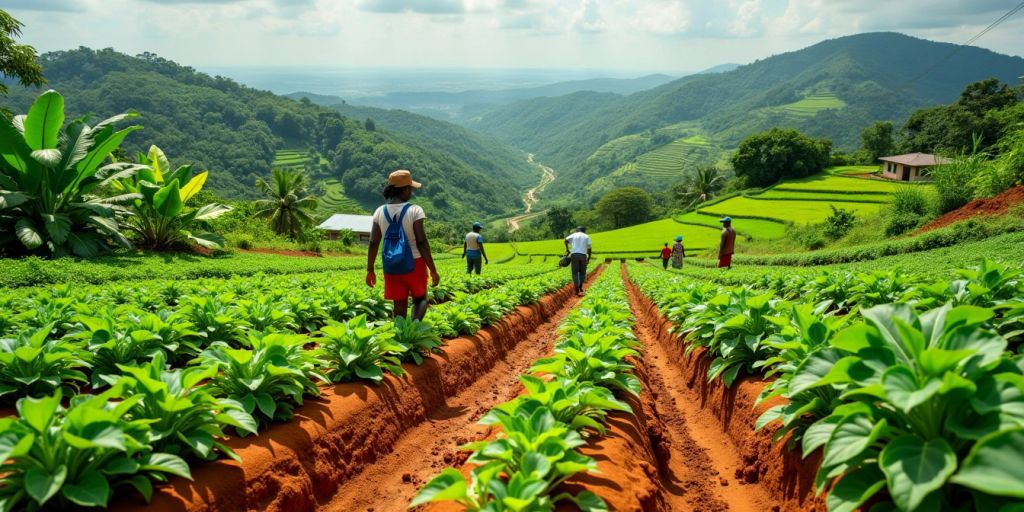
Farmers harvesting crops in Liberia's lush farmlands.

Overcoming Infrastructure Barriers

Liberia faces significant infrastructure challenges that hinder agricultural investment. Poor road conditions and limited access to markets make it difficult for farmers to sell their products. To address these issues, the government and private sector can:

  • Invest in road construction and maintenance.

  • Develop transportation networks to connect rural areas with urban markets.

  • Encourage public-private partnerships to fund infrastructure projects.

Addressing Financing Gaps

Many farmers struggle to secure funding for their agricultural projects. This lack of financial support limits growth and innovation. Solutions include:

  1. Establishing microfinance institutions to provide small loans to farmers.

  2. Offering government grants and subsidies for agricultural initiatives.

  3. Creating investment funds specifically for the agricultural sector.

Enhancing Market Access

Farmers often find it hard to reach larger markets, which affects their income. To improve market access, stakeholders can:

  • Organize farmer cooperatives to increase bargaining power.

  • Implement training programs on marketing and sales strategies.

  • Use technology to connect farmers directly with consumers.

Investing in agriculture is not just about money; it’s about building a sustainable future for Liberia’s farmers and communities.

Future Prospects for Liberia’s Agricultural Sector

Lush Liberian farmland with farmers harvesting diverse crops.

Projected Growth Trends

Liberia’s agricultural sector is expected to grow steadily in the coming years. The economy is projected to expand by 5.3% in 2024, with agriculture playing a crucial role in this growth. Key factors influencing this growth include:

  • Increased foreign investment in agriculture.

  • Government support for sustainable farming practices.

  • Improved infrastructure for transportation and market access.

Potential for Export Expansion

There is significant potential for Liberia to expand its agricultural exports. The following commodities are likely to see increased demand:

  1. Rice

  2. Oil palm products

  3. Horticultural goods

Long-Term Economic Impact

Investing in agriculture can lead to long-term benefits for Liberia’s economy. These benefits include:

  • Job creation in rural areas.

  • Enhanced food security for the population.

  • Increased income for farmers and local communities.

Investing in Liberia’s agriculture not only supports the economy but also helps build a sustainable future for its people.

Conclusion

In conclusion, investing in Liberia’s agriculture offers a unique chance to tap into the country’s rich resources. With fertile land and a strong commitment to improving food security, Liberia is ready for growth in the agro-industry. Investors can benefit from government support and innovative farming techniques. By getting involved, you not only help boost the local economy but also create a positive impact on the community. This is a great time to explore the possibilities in Liberia’s agricultural sector and make a difference while achieving good returns.

Frequently Asked Questions

What are the main agricultural products in Liberia?

Liberia mainly grows rice, oil palm, and various fruits and vegetables.

How is the government supporting agriculture in Liberia?

The Liberian government offers programs and funding to help farmers improve their production and access markets.

What are the benefits of investing in Liberia’s agriculture?

Investing in agriculture in Liberia can lead to financial returns while also helping to improve food security in the country.

What challenges do farmers face in Liberia?

Farmers in Liberia often struggle with poor infrastructure, limited access to financing, and market access.

How can technology improve farming in Liberia?

Technology can help farmers use better farming techniques, manage their crops, and connect with buyers more easily.

What is the future of agriculture in Liberia?

The future looks promising with potential for growth and export opportunities, especially with government support and investments.

Unlocking Liberia’s Investment Potential: Key Sectors for Economic Growth

Liberia, a West African nation rich in natural resources and positioned at the heart of the African continent, presents numerous opportunities for foreign investors seeking to tap into a growing economy. With a rapidly improving business environment and an abundance of key sectors ripe for development, Liberia is positioning itself as an attractive destination for foreign direct investment (FDI). This blog post will explore the most promising Liberia investment opportunities, highlighting the key sectors in Liberia that have the potential to drive long-term economic growth in Liberia.

1. Agriculture: The Backbone of Liberia’s Economy

Agriculture is the largest sector in Liberia, contributing significantly to the country’s GDP and employing a majority of its population. With fertile land and a climate suitable for a wide range of crops, including rice, cassava, cocoa, and palm oil, there are vast investment opportunities in Liberia’s agricultural sector.

Investing in agro-processing, value-added production, and mechanization can not only boost domestic food security but also position Liberia as a key exporter within West Africa. Given the global demand for organic and sustainably grown products, the potential for growth in Liberia’s agriculture sector is immense, offering foreign investors a chance to participate in both primary agriculture and agro-industrial ventures.

2. Mining and Natural Resources: Tapping into Liberia’s Wealth

Liberia is home to vast mineral resources, including iron ore, gold, and diamonds. The mining sector has historically been one of the largest contributors to economic growth in Liberia, and it remains one of the key pillars of the country’s investment landscape.

For foreign investors, Liberia’s mining industry presents opportunities in exploration, extraction, and the development of mining infrastructure. With increasing global demand for minerals, this sector holds the potential for long-term returns, making it a crucial part of foreign direct investment in Liberia.

In addition, Liberia’s government has shown a commitment to creating a conducive business environment in Liberia by implementing reforms aimed at improving the mining sector’s transparency and governance, ensuring it remains a key sector for growth.

3. Infrastructure Development: Bridging the Gap

Liberia’s infrastructure, though improving, still presents significant opportunities for foreign investors. Investment is needed in areas such as roads, ports, energy, and telecommunications. The country is looking to rebuild its infrastructure after years of conflict, and foreign investors can play a pivotal role in providing the capital and expertise necessary to bring these projects to life.

The Liberian government has been actively promoting public-private partnerships (PPPs) as a way to encourage foreign direct investment in Liberia and drive development in key sectors. By investing in infrastructure, investors not only contribute to economic growth in Liberia but also create the backbone for future investments in other industries such as agriculture, tourism, and manufacturing.

4. Tourism: Untapped Potential

Liberia’s lush landscapes, pristine beaches, and rich cultural heritage make it an emerging destination for tourism. Although the sector is still in its infancy, the potential for growth is significant. From eco-tourism in Liberia’s national parks to the development of resorts along its coastline, there are ample investment opportunities in Liberia for foreign investors looking to capitalize on this underdeveloped sector.

With increased investment in transport and hospitality infrastructure, Liberia’s tourism industry could become a significant driver of economic growth in Liberia. The government’s focus on improving the business environment in Liberia for the tourism sector includes creating incentives for foreign investors, such as tax breaks and reduced barriers to entry.

5. Energy: Powering Economic Growth

Access to reliable and affordable energy is a key driver of economic development, and Liberia’s energy sector offers great potential for investors. The country is rich in renewable energy resources, particularly hydroelectric and solar power, and has embarked on an ambitious plan to expand its energy grid to underserved areas.

Foreign investors can tap into opportunities in power generation, transmission, and distribution, helping to close the energy gap and power industries across the country. Investment in renewable energy, in particular, aligns with global trends towards sustainability and offers long-term growth potential.

Liberia’s Improving Business Environment

A key factor in unlocking Liberia’s investment potential lies in its improving business environment. In recent years, the Liberian government has implemented reforms aimed at enhancing the ease of doing business, improving regulatory frameworks, and providing investment incentives. These reforms have made it easier for foreign investors to establish businesses, repatriate profits, and participate in joint ventures with local enterprises.

Additionally, Liberia’s membership in regional and international organizations such as the Economic Community of West African States (ECOWAS) and the World Trade Organization (WTO) provides investors with access to broader markets and trade opportunities. This improved business environment in Liberia is crucial in attracting foreign direct investment in Liberia and promoting sustainable economic development.

Conclusion: A New Frontier for Investors

As Liberia continues to recover from past challenges and focus on growth, its potential as an investment destination cannot be overstated. The country’s rich natural resources, strategic location, and commitment to reforming its business climate make it a compelling choice for investors looking to enter new markets. Whether in agriculture, mining, infrastructure, tourism, or energy, the key sectors in Liberia offer abundant investment opportunities in Liberia that can drive both profits and economic growth in Liberia for years to come.

Investors who recognize Liberia’s potential now will not only benefit from first-mover advantage but also contribute to the nation’s ongoing development, helping to shape the future of West Africa’s growing economies.

connect with us @ www.cardinalpointadvisors.net for more interesting opportunities and how to get started in Liberia